A little bit of Ravello history
The legend traces the origins of Ravello back to the 5th century, when the Barbarians who sacked Rome founded a refuge on the hills. However, it is certainly more probable that they found an already populated centre and decided to stay there. The history of Ravello acquires greater documentary consistency from the creation of the Maritime Republic of Amalfi in 839, when the territory around the coastal centre became a Duchy. The town grew thanks to the art of wool and to trade with the Mediterranean and Byzantium, and reached its highest splendour from the ninth century, under the Amalfitan Republic and the Principality of Salerno.
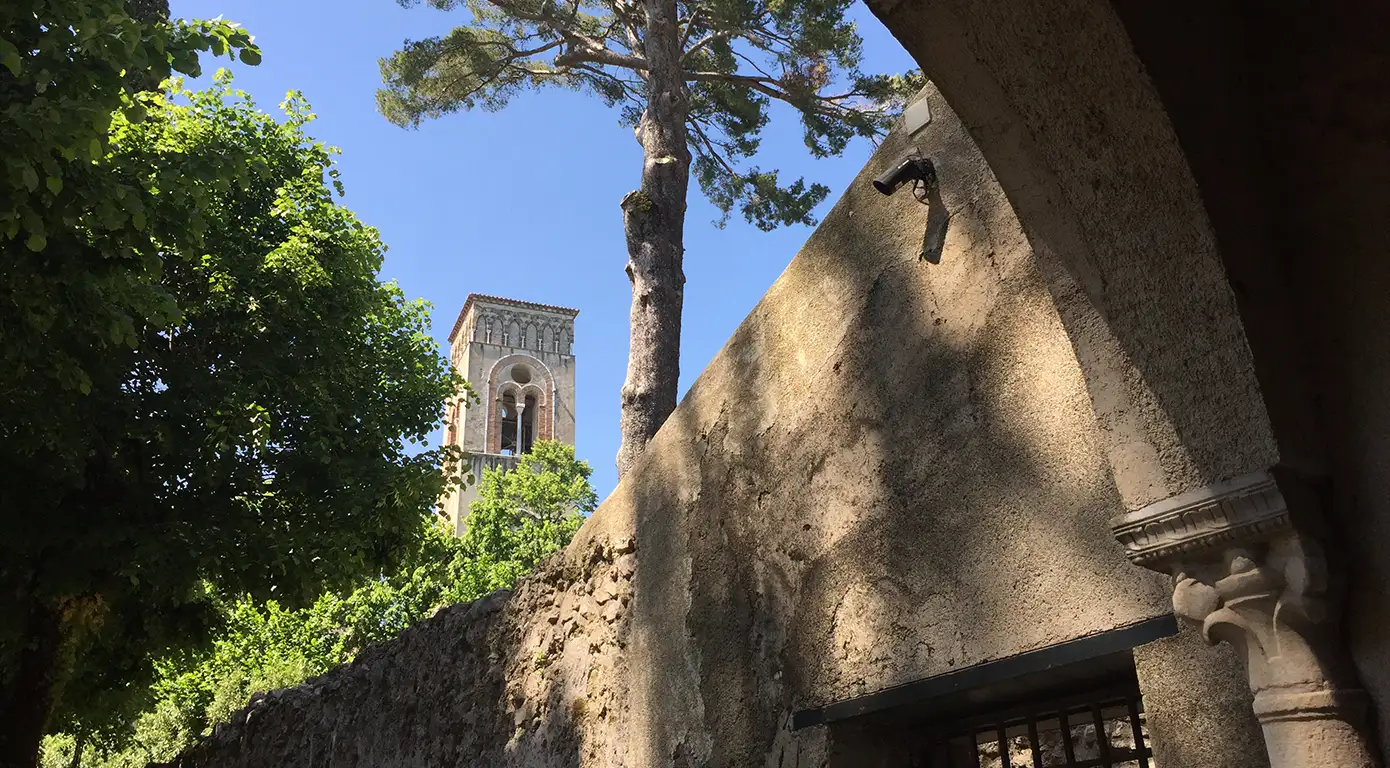
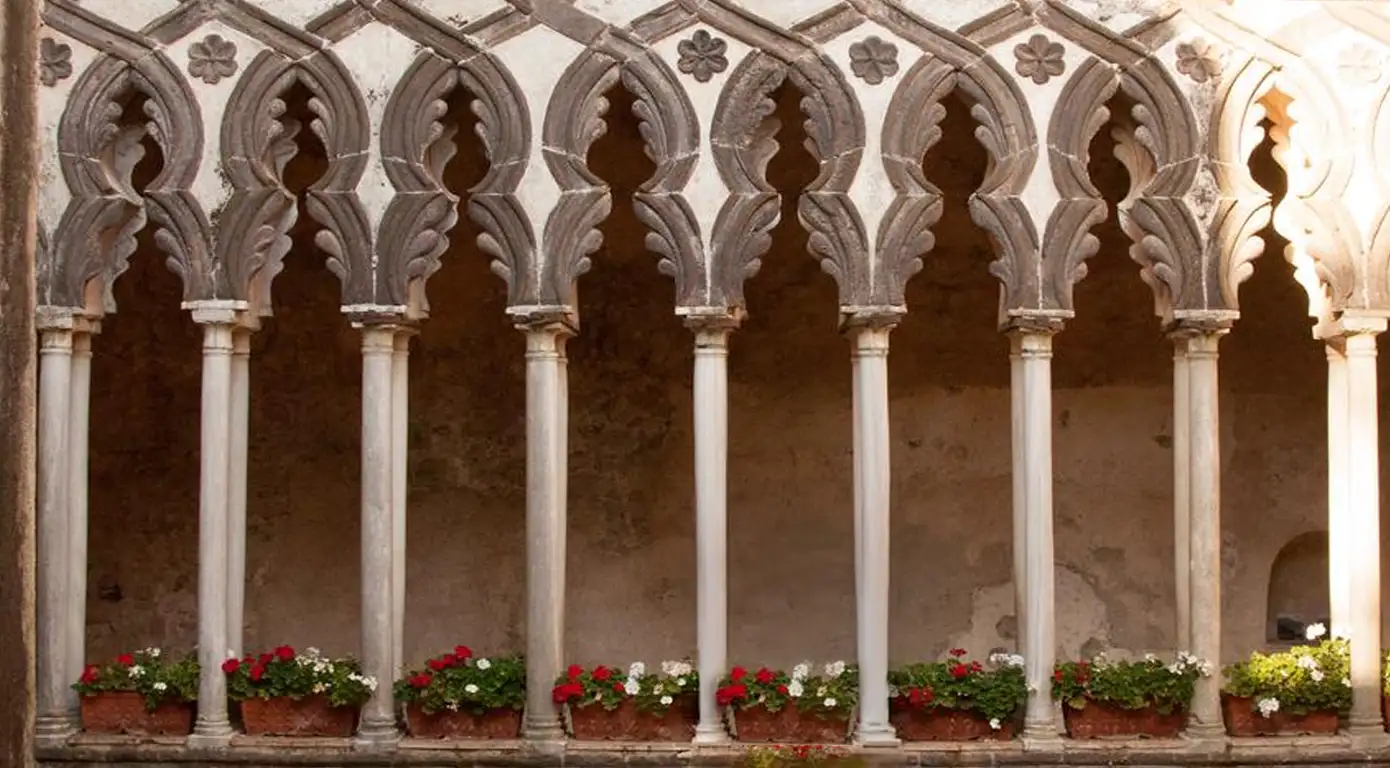
Having a walk through the streets of this enchanted village, you immediately notice an elegant and refined style. The Arab-Sicilian taste of the palaces and churches recalls the time when trade with the Levant was flourishing, and the town was considerably more inhabited. In the secondary streets, you discover a quieter dimension, linked to rural traditions, with gardens bordered by dry stone walls, rich in vegetation, and well-kept.
4 places you can not absolutely miss in Ravello
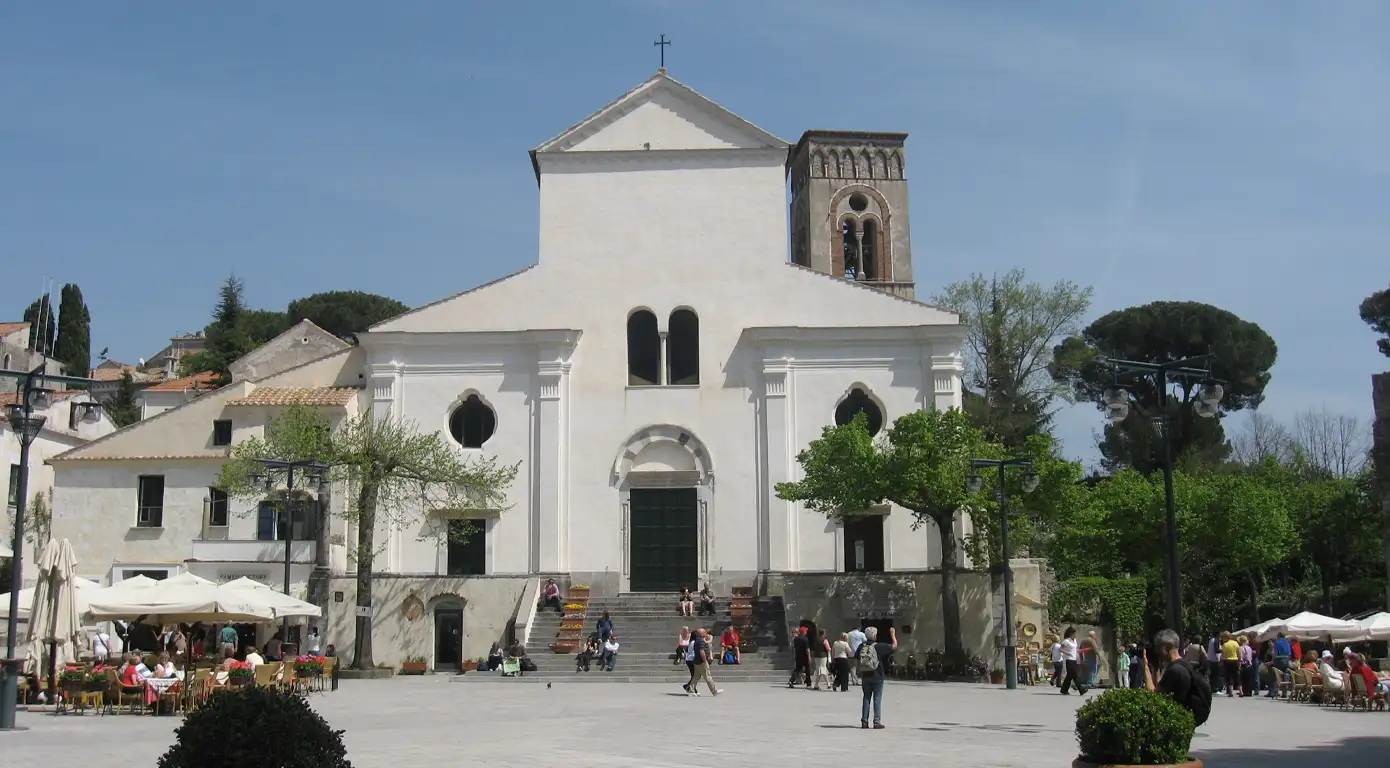
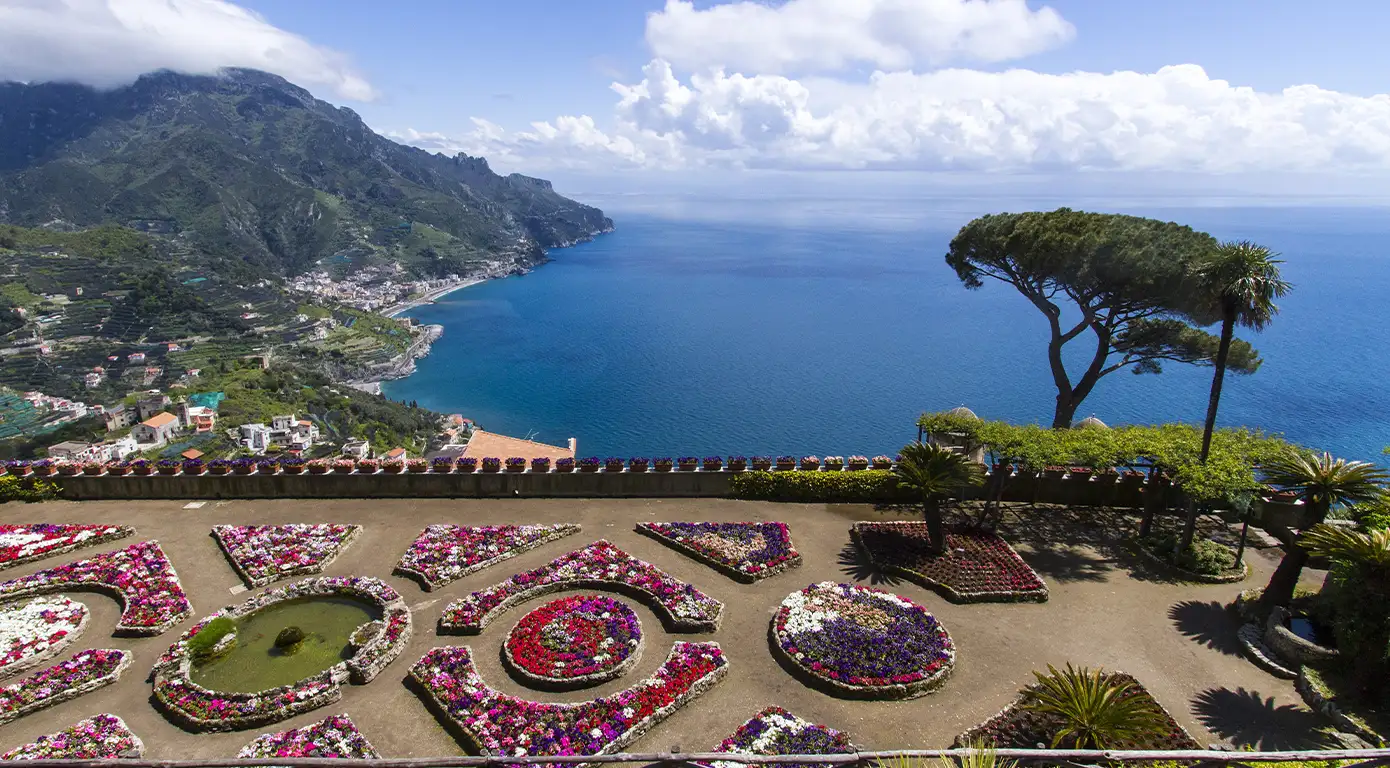
South of the Duomo, there is Villa Rufolo, a splendid historic residence famous for its gardens overlooking the sea. The Villa was built in the thirteenth century by the Rufolo family, which for over two centuries was the symbol of the economy and the political leader of medieval Ravello. The power of the family ended in 1285, when they opposed the Angevins during the Sicilian Vespers. The Villa was built by combining Arabic and Byzantine architectural and decorative typologies, with elements of local culture, and, over time, it was also used as a residence by various popes and King Roberto D’Angiò. In the nineteenth century, the Villa was abandoned, but the Scotsman Francis Nevile Reid decided to buy it and completed the restoration, creating the spectacular terraced gardens, enriched with splendid flowers (which reach their maximum splendour from May to October). Someone says that, after visiting these gardens, the famous composer Richard Wagner was so impressed that he took it as a model for the setting of the second act of Parsifal.
The thirteenth-century Torre Maggiore currently houses a museum that illustrates the history of the Villa, enriched by an exhibition of works of art, archaeological finds, and ceramics. An internal staircase leads to a terrace which offers a splendid view of the Amalfi Coast.
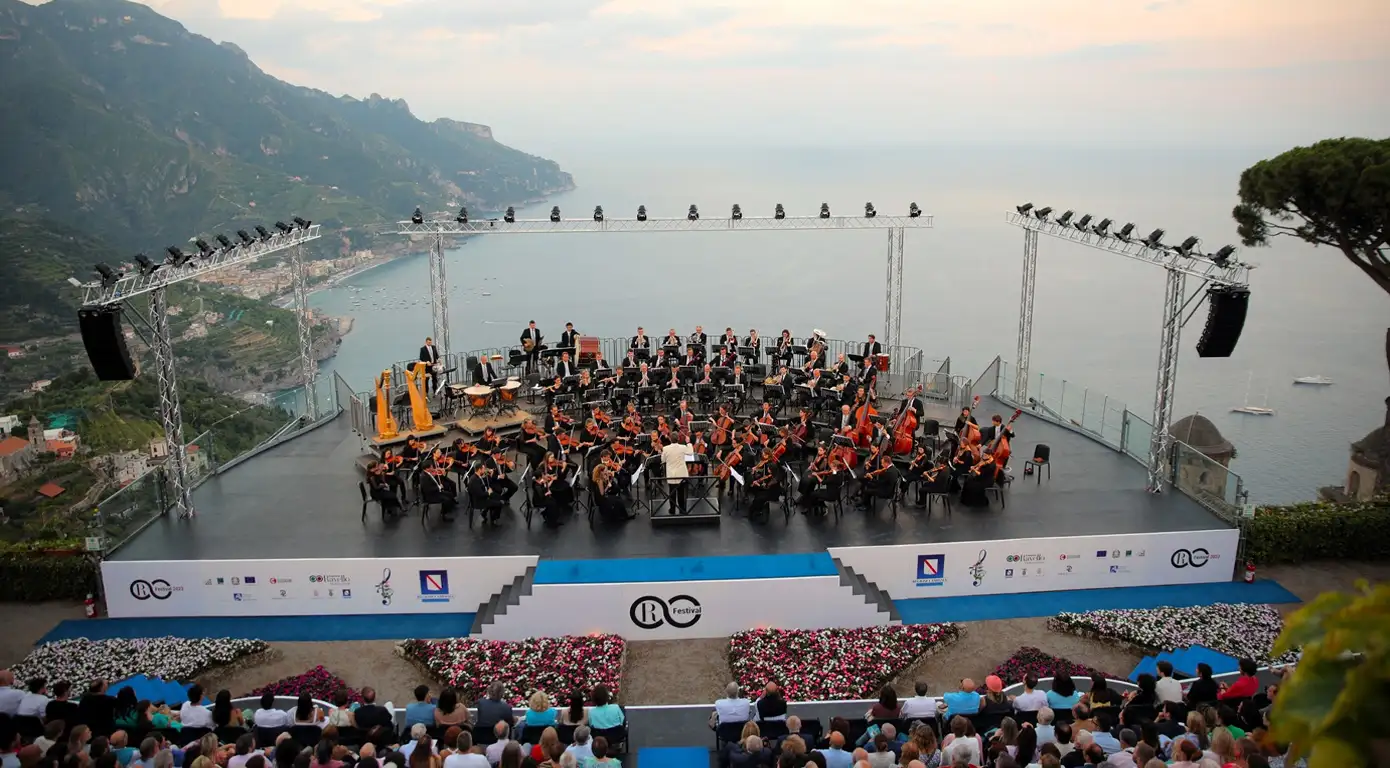
Today, Villa Rufolo hosts an annual summer classical music festival.
From the centre of Ravello, a 10-minute walk through the pleasant streets of S. Francesco and S. Chiara brings you to this marvellous 11th-century residence, now a luxury hotel. Until the 1970s, the villa was known as a place frequented by artists, actors, and illustrious guests, including Virginia Woolf, Winston Churchill, Salvador Dalí, Rossellini with Bergman, Grace Kelly, Jackie Kennedy, and many others.
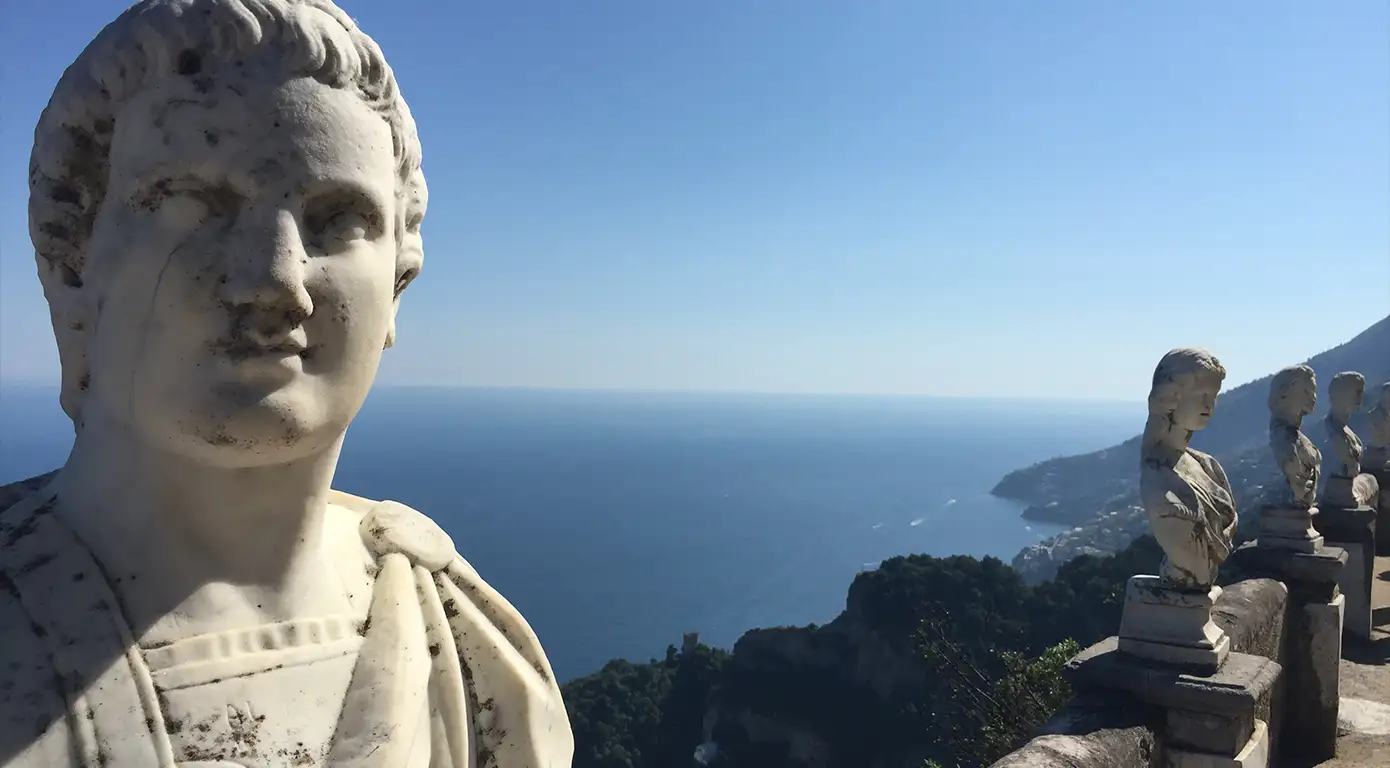
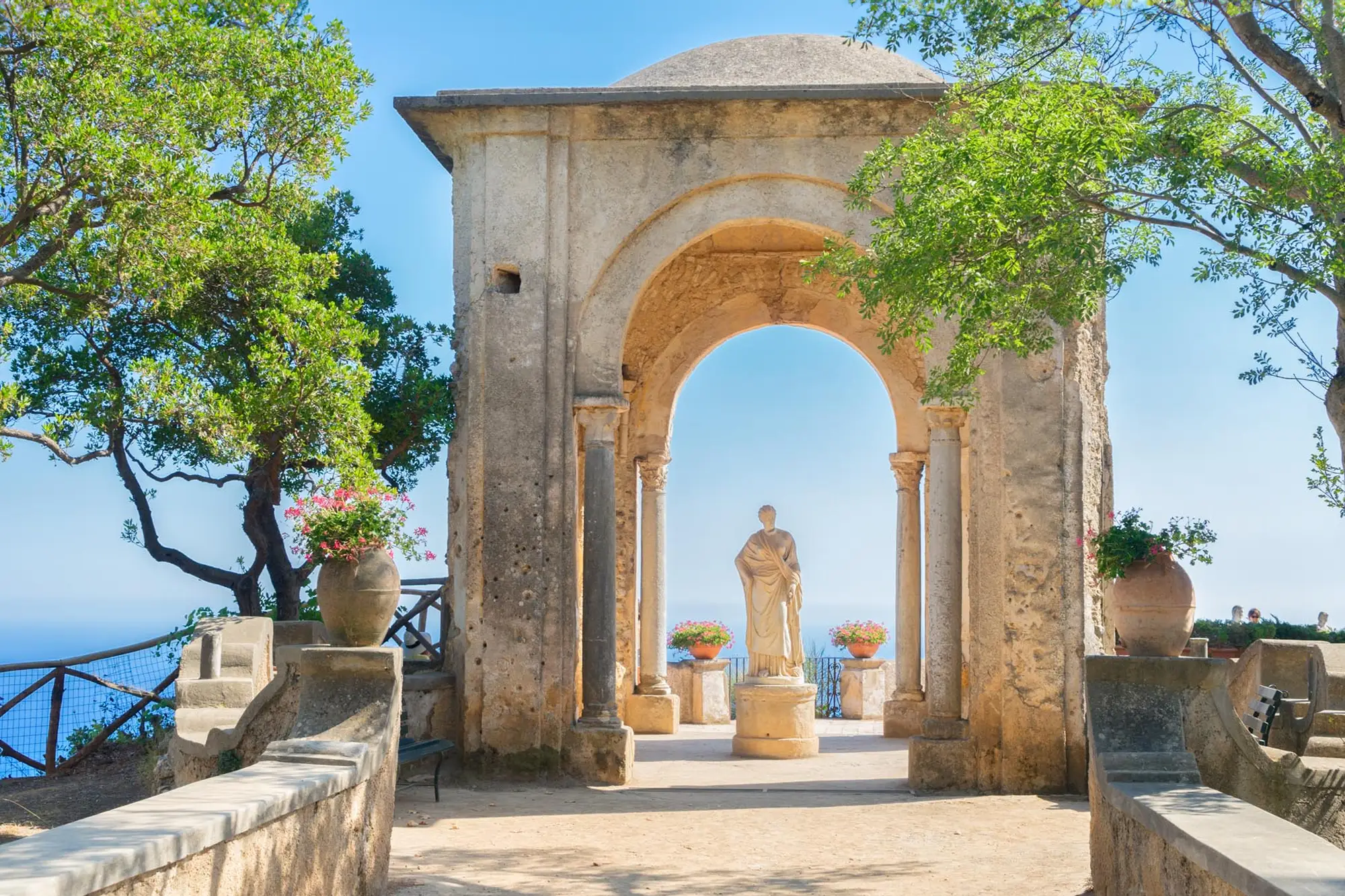
From the famous Belvedere Cimbrone (also called Belvedere of the Infinite) you can admire one of the most beautiful and evocative views of the Amalfi Coast, framed by classical busts with a background of coast and colourful villages. The gardens were redesigned at the beginning of the twentieth century thanks to the precious contribution of the English botanist Vita Sackville West and are characterized by rose gardens, temples, and even a Moorish-style pavilion. It is one of the most important examples of Anglo-Saxon landscape and botanical culture in southern Europe.
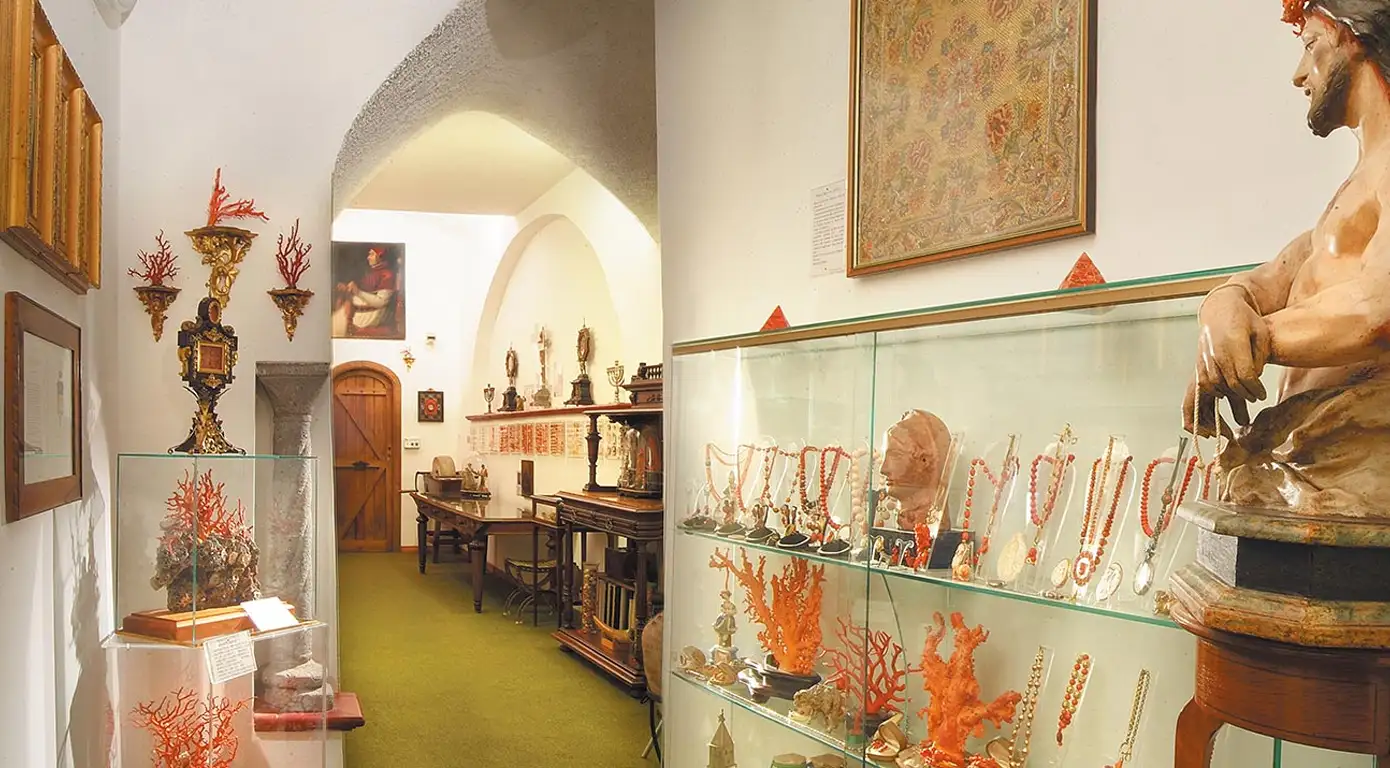
This place can look like a shop-laboratory that sells cameos of precious workmanship, made mainly with coral and shells. Instead, it is a small museum that houses a collection of some valuable pieces, such as a Roman amphora of the third century AC, a Madonna Assunta of the sixteenth century, and a Christ of the seventeenth century, both in Italian coral. The museum was founded in 1986 by the will of Giorgio Filocamo, who made available his expertise in working coral in his workshop under the Cathedral and generously shared with the public the valuable heritage left to him by his grandfather.
Where to eat in Ravello
Contrary to all expectations, in Ravello there aren’t many places to stop for a meal, but the few restaurants available offer good food and a pleasant atmosphere!
In addition to the spectacular panorama its terrace offers, Da Salvatore serves fabulous dishes, prepared with local products, with creativity and elegance, accompanied by a wide selection of wines. In the evening, part of the restaurant becomes an informal pizzeria serving excellent wood-fired pizzas, considered by many to be among the best in the area.
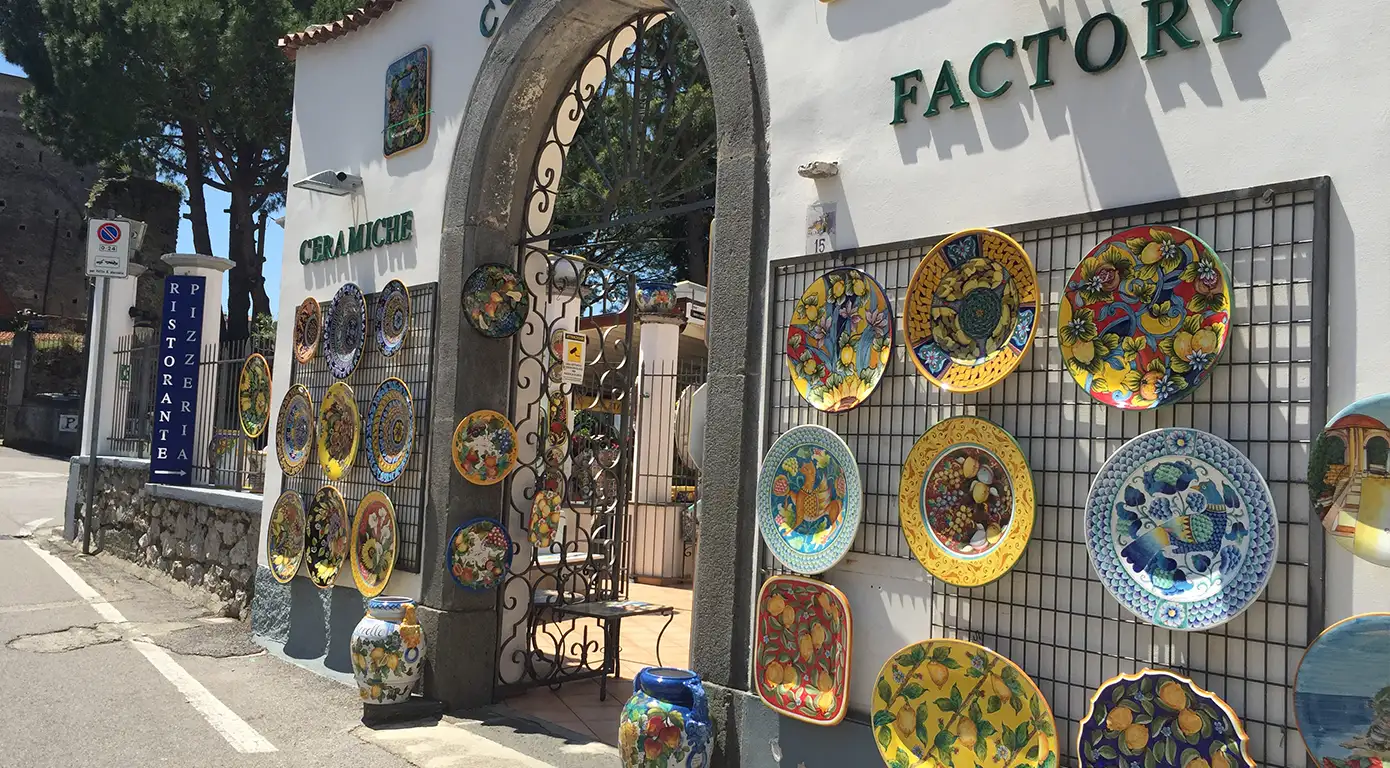
Concerning pizzas, the Ristorante Pizzeria Vittoria also offers exceptional specialties: you can choose from 16 different varieties of pizza or high-level seafood dishes.
Finally, at Cumpà Cosimo, an ancient family-run trattoria from other times, you will find simple but very tasty dishes, such as rabbit with cherry tomatoes and grilled shrimps.
Ravello Festival: a summer of music and… more!
From the first days of July to September, the centre of Ravello becomes the stage of the Ravello Festival, inaugurated in 1953 and dedicated to the composer Richard Wagner. In this period, symphonic and chamber music concerts, ballets, film screenings, and art exhibitions are held, often in suggestive places with the sea as a backdrop.
The Limoncello

Itinerary suggestions in Ravello
Ravello is the starting point for many trails, some of which follow ancient itineraries through the surrounding Lattari Mountains.
Conclusion
If you’re planning your excursion from Positano to Ravello and want to organize your timing, stops, and routes as efficiently as possible, our advice is to rely on Positano Scooter. Ask for personalized suggestions on scenic itineraries, the most convenient parking options, and all the useful information about scooter rentals. The staff will be happy to recommend the best solution to help you move freely and experience the Amalfi Coast in a simple, enjoyable, and stress-free way.
Copy this Promocode and
get ready to enjoy your trip!
Copy this Promocode and
get ready to enjoy your trip!